
What Is the Persona Survey and How Does It Change Class?
The Persona Survey, also called the Persona-lized Assessment, is a 3-minute survey you take before your first Persona Pilates class. It sorts you into one of five Personas, each with its own approach to pace, intensity, and focus. Your instructor sees that profile before class, so your 45 minutes are coached to you from the first rep.
At a lot of studios, the first class starts with a blank stare and a clipboard, if it starts with anything at all. You fill in a waiver, and you wait. Then you try to explain your body in a hallway while the previous class is leaving.
Persona Pilates starts earlier than that. The 3-minute Persona Survey is the part of class that happens before you put your grip socks on. It’s how your workout gets personalized to you while you’re still at home.
No more generic classes where you get ignored. The survey exists so your instructor isn’t guessing when you walk in.
What does the Persona Survey ask you?
You answer questions about how you move, how you recover, and how you like to work. The survey sorts you into one of five Personas: Vitality Voyager, Balance Builder, Zen Starter, Power Pursuer, or Recovery Resilient. Each of those five has its own approach to pace, intensity, and focus.
Under that label, the survey generates 1 of 125 unique fitness profiles (your Persona combined with your own attributes). That number matters because five buckets aren’t enough to coach a real body. The profile is the version your instructor actually reads.
You don’t need a training history to complete it, and you don’t need to know Pilates vocabulary. You need three honest minutes. That’s less time than parking.
Who sees your Persona Survey results?
The profile doesn’t sit in a folder behind the desk. Custom software puts it in front of your instructor before class. Instructors read your data the way a good coach reads a brief: goals, history, and how you tend to move, not a marketing slogan.
That’s why day one doesn’t have to feel like day zero. You can still talk, and you should still mention what is sore. You shouldn’t have to recap your entire training story between the cubby and the reformer.
If you’ve never taken reformer Pilates, the survey still helps. It tells your instructor you’re new, what you care about, and how hard you usually like to work. Modifications become a plan, not a scramble.
What actually changes on the reformer?
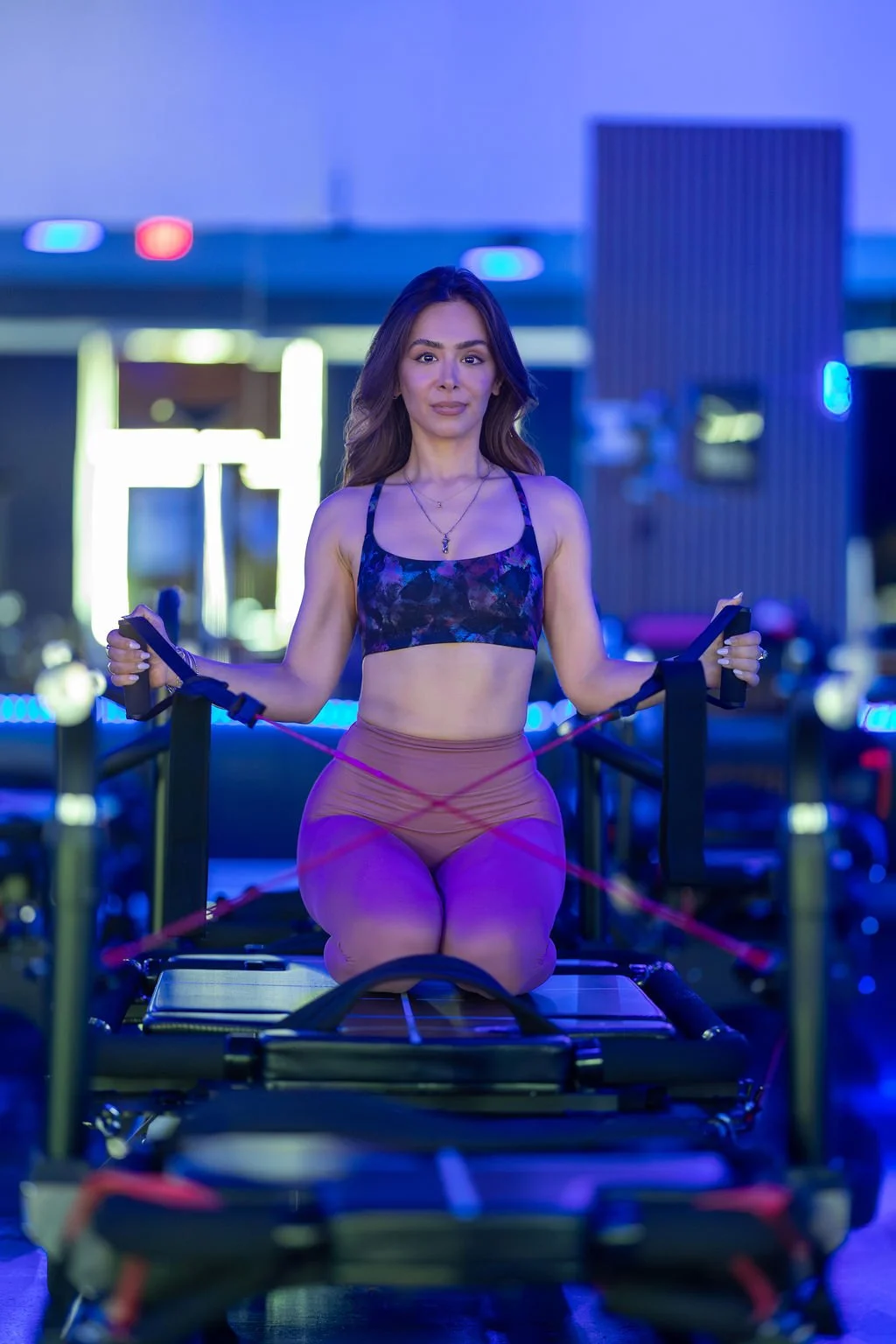
Pace, intensity, focus. Your profile tells your instructor which dial to turn first.
The class is still 45 minutes. It’s still full-body. It’s still slow, controlled work on a Maven reformer, Persona Pilates’ custom reformer from its partnership with Maven. The survey doesn’t invent a private class. It changes how that shared class lands on you.
Pace is the first dial. Some profiles need more time to organize a movement pattern before the load goes up. Some can move a little quicker once the shape is honest. Your instructor uses the profile to decide which version you get, then watches you to confirm it.
Intensity is the second dial. Springs, range, and how long you hold a position all change the demand. Two people can do the "same" exercise and have completely different work happening in the hip or the trunk. That isn’t a trick. It’s coaching.
Focus is the third dial. Your profile points your instructor toward what to watch. Maybe that’s how you brace. Maybe it’s how you load a knee. Maybe that is whether you rush the return because you are used to fast classes. Hands-on corrections follow that focus. A hand on a ribcage, a tap on a shoulder, a quieter cue to wait: those are the survey showing up in real time.
Why don’t you have to re-explain yourself to every instructor?
In a generic studio, you become the person who has to tell every new instructor the same three sentences. After a month, you stop telling them, and then you get coached like everyone else.
Persona Pilates uses custom software so that doesn’t happen. Your instructor already knows the outline of your goals on day one. The next instructor can see the same outline, and you are not starting over because the schedule changed.
Body Scanner sits on the other side of this, tracking progress so your plan can move when you do. The survey is the opening chapter, not the whole book. And chapters only work if someone reads them before class, not after you leave.
Is the Persona Survey a medical assessment?
It’s not a medical diagnosis, and it’s not a promise about body composition or lean muscle on a timeline. If you have pain or an injury, check with your doctor or a physical therapist, and tell your instructor. It isn’t a ranking of how "serious" you are compared with the person on the next reformer.
It is a practical brief. We rebuilt intake so the brief exists, your instructor can see it, and the 45 minutes can be coached instead of announced.
Grip socks are still required, and you still don’t need experience. Your first class is $10. The survey doesn’t replace any of that. It just makes those 45 minutes feel like yours faster.
If you take the Persona Survey on a Tuesday and book a class on Thursday, your instructor should already have what they need. If something changed between Tuesday and Thursday (a cranky back, a bad night of sleep, a long drive), say it at the reformer. Data plus a human in the room is the method.
Take the Persona Survey, then get on the reformer
The survey is the start, and the class is the proof. You will know it worked if you spend less time translating yourself and more time being coached.
Do the three minutes, then book a 45-minute class at a Persona Pilates studio in Austin or Houston, like Hill Country 71 or West University. Arrive a few minutes early, put on grip socks, and let the instructor who already read your profile put you on the Maven reformer.
Book your $10 first class. Take the Persona Survey so your workout can change before you arrive.