
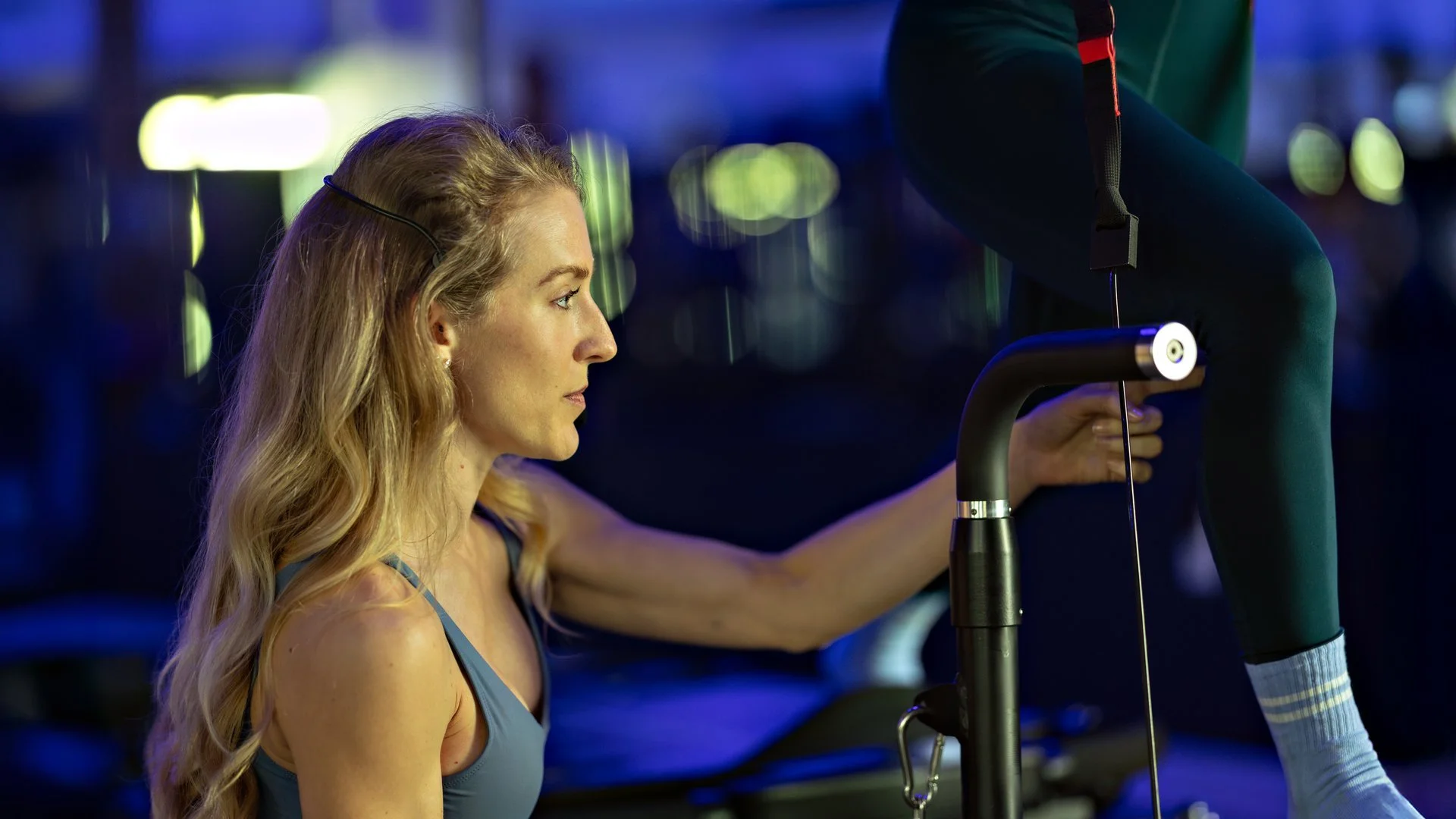
Your instructor is watching your form, not the clock. That's how Persona Pilates catches problems early.
Reformer Pilates may be hurting you if you’re always sore and never recover, or if you feel joint or sharp pain rather than muscle work. Other signs are chasing a harder class every time, ignoring how your body feels that day, and using workouts as punishment. Good reformer Pilates challenges you with control. It shouldn’t leave you in pain. If you have an injury, ongoing pain, or a health condition, talk to your doctor or a physical therapist before starting or continuing class.
Reformer Pilates has earned its fans. Done well, it builds strength, control, and body awareness without pounding your joints. Done poorly, or programmed for someone else’s body and ego, it can leave you feeling worse instead of stronger.
That tension sits at the center of a recent Daily Mail piece on five signs your reformer routine is doing more harm than good (You Magazine / Daily Mail, Sep 18, 2026). In it, Pilates studio founder Nikkii Behrens argues that when high-intensity fitness culture takes over classic Pilates principles, the line between effective training and physical breakdown blurs quickly.
We agree with the heart of her argument. In our Austin and Houston studios, we see the same pattern: people mistake sweat and next-day soreness for progress. Here’s how those five signs show up in real life, and how a personalized reformer practice is built to catch them earlier.
What are the five signs reformer Pilates is hurting you?
1. You’re always sore and never fully recovering
Behrens is clear that some muscle fatigue is normal when you’re progressing or trying something new. Ongoing soreness and exhaustion, though, aren’t proof you’re working harder. If you never recover between sessions, or you’ve started dreading the next class, your overall training load may be too high.
Our take: Recovery is part of getting stronger. You on a Tuesday at 6 a.m. after a short night isn’t the same you who shows up rested on Saturday. Picking Foundations over Strength on a rough day isn’t quitting. It’s training intelligently. Because your instructor already knows your Persona, they can dial intensity down before you have to ask mid-set.
2. Every class has to be harder than the last
Fitness culture loves more springs, more advanced moves, and more exhaustion. As Behrens notes, Pilates progression should mean better control, more precision, improved range of motion, and cleaner execution. Sometimes that means slowing a move down instead of adding load.
Our take: We rebuilt our studios as the opposite of the franchise model, where everyone gets the same choreography no matter who walks in. Your Persona shapes your pace, intensity, and focus. Some days the win is holding a position longer with better alignment, not surviving a harder playlist.
3. You’re feeling pain, not muscular work
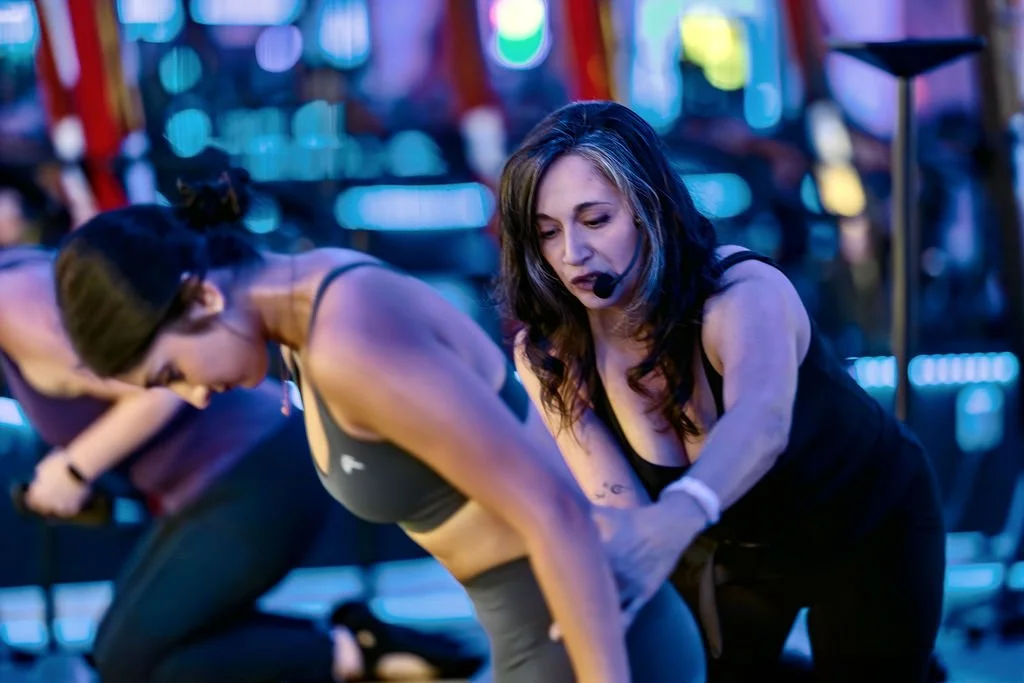
Joint pain isn't part of the plan. A hands-on correction fixes your setup before it turns into a problem.
Muscles working and joints complaining are two very different things. Repeated discomfort in your low back, neck, shoulders, hips, or knees isn’t “just how reformer is.” Behrens points to a few possible causes: technique, resistance that’s wrong for that day, or a move that doesn’t suit your body right now.
Important: This post is educational, not medical advice. If you have sharp pain, an injury, post-surgery restrictions, or a condition that affects exercise, check with your doctor or a physical therapist before you book or continue. A good instructor modifies the movement. A good instructor never tells you to push through pain.
Our take: Before your first reformer class, the Persona Survey captures your goals and relevant history. Your instructor sees your Persona profile before class starts. So you’re not re-explaining that knee, that neck, or “lighter springs today, please” at every visit. During class, they watch how you move and give hands-on corrections when something looks off.
4. You’re ignoring what your body needs today
Sleep, stress, your menstrual cycle, pregnancy, postpartum recovery, perimenopause, and menopause can all change your capacity on a given day. Behrens rightly flags this. Showing up because an app pinged you isn’t the same as training well. If you’re pregnant or recently postpartum, ask your doctor or midwife what’s right for you, and tell your instructor at check-in.
Our take: Personalized coaching means the plan flexes with you. Foundations exists for a reason, and so does Strength. Combo runs only at Arbor Town Square and Houston Heights. Hot Mat Sculpt runs only at Downtown Austin and West University. Both are there for people who want that mix. Either way, the starting point is your body that day, not the loudest class on the schedule.
5. You’re using workouts as punishment
Guilt about food. Panic over a missed session. Judging a class only by sweat or how wrecked you feel afterward. Behrens calls this perhaps the biggest red flag, and it’s the one we care about most as a community.
Movement should add to your health, strength, and longevity. It shouldn’t be one more way to punish yourself.
Our take: We track progress with Body Scanner, so you can see change over time. Soreness makes a lousy scorecard. Progress you can measure beats progress you only feel as pain.
How does a personalized studio catch these red flags?
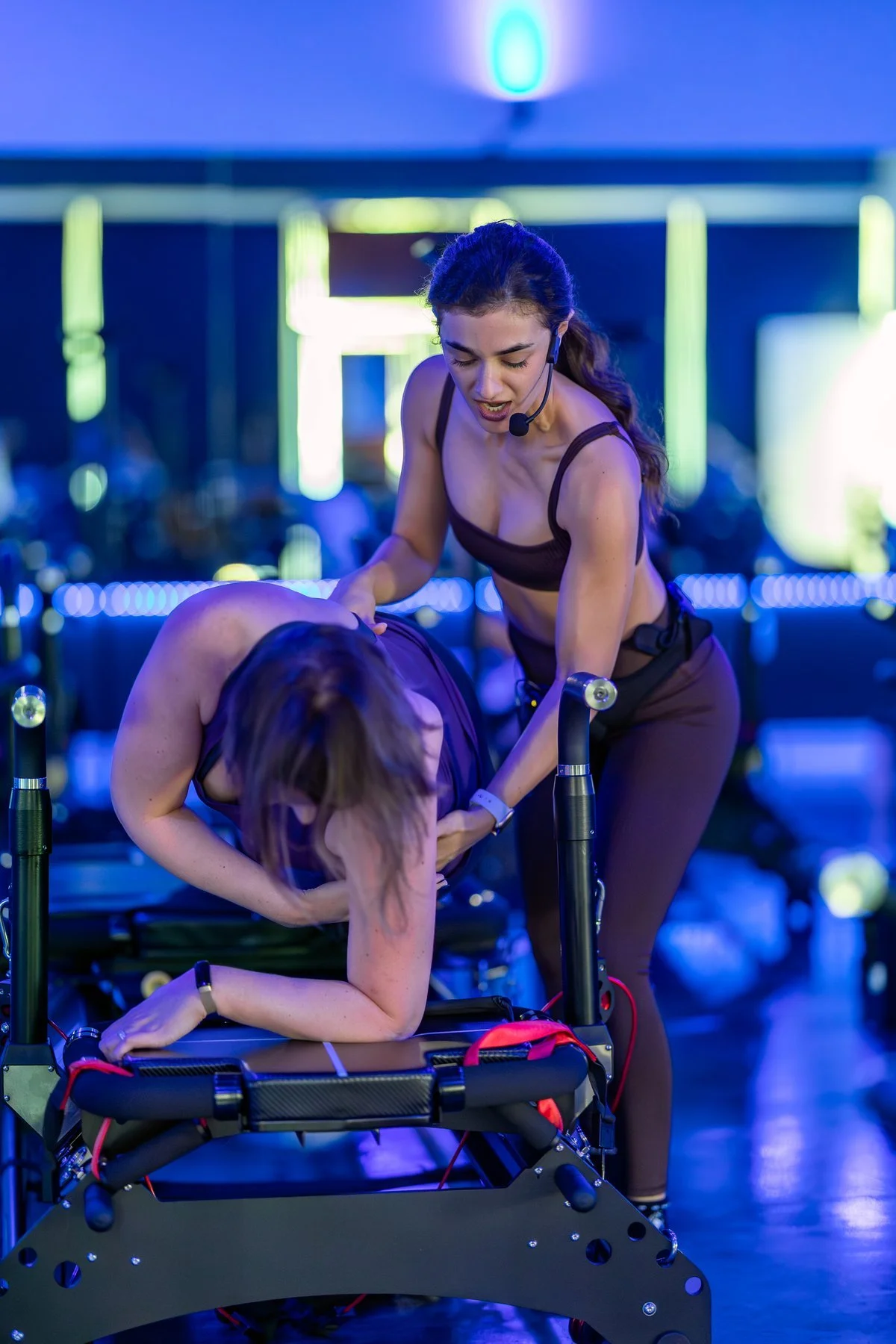
Your instructor reads your Persona profile before class. So every hands-on correction starts with you, not a script.
Generic studios hand you the same class as the person next to you. Persona Pilates starts by learning how you move, recover, and push, then builds your classes around that.
3-minute Persona Survey, then your Persona A short survey matches you with your Persona (for example: Vitality Voyager, Balance Builder, Zen Starter, Power Pursuer, or Recovery Resilient). Each one sets its own pace, intensity, and focus before you ever step on the reformer.
Instructor summaries before class Your instructor reads your Persona profile before you walk in. Your goals don’t reset to zero every time a new coach teaches. Tell your instructor about injuries or restrictions at check-in so they can modify from the start.
Coaches trained the Persona Pilates way Our in-house training teaches instructors to read your data and give hands-on corrections. Nobody is reciting a franchise script from the front of the room.
Body Scanner for measurable progress When you ask “am I getting better?” the answer shouldn’t be “I could barely walk yesterday.” Body Scanner lets you track real change, so your workouts evolve with you.
You still get the energy of a welcoming group room. The coaching is simply personalized to you.
What should you check before your next reformer class?
Know the difference between muscle work and joint or sharp pain. If something feels wrong, stop and tell your instructor.
Choose control over chaos. Sometimes slowing a move down is the progression, instead of adding springs.
Book the right level for today (Foundations, Strength, or another format). Ego is not a spring setting.
Share updates. If anything has changed since your Persona Survey, mention it at check-in.
Grip socks are required at all Persona Pilates studios for safety and hygiene. Fitted activewear helps your instructor see your alignment.
New to Pilates? You belong here, and modifications are always available. You don’t need to be flexible or “in shape” first.
Want more on form? See our Client Academy guide on common Pilates mistakes. Coming back from an injury? Read post-injury Pilates rehab paths, and get clearance from your doctor or physical therapist first.
Book your $10 first class in Austin or Houston
If the Daily Mail piece has you questioning the idea that class has to hurt to work, you’re not alone. You also don’t have to settle for a generic script.
Your first Persona Pilates class is $10 at any Austin or Houston studio. Take the short Persona Survey, meet an instructor who already has your profile, and feel what reformer coaching built around you is actually like.
First-timers overview: personapilates.com/first-timers
FAQ (assessment, attire, grip socks, class types): personapilates.com/faq
Studios: personapilates.com/locations
Book your $10 first class in the Persona Pilates app or at personapilates.com. Grip socks required. Every level welcome. If you have pain, an injury, or medical questions, talk to your doctor or physical therapist first.
Citation
Daily Mail / You Magazine, by Emily Cleary, featuring Pilates studio founder Nikkii Behrens: Five signs your reformer Pilates routine is doing more harm than good (Daily Mail) (published Sep 18, 2026).
Disclaimer: Educational studio content only, not medical advice. Check with your doctor or a physical therapist when appropriate.