
Does Your Pilates Instructor Matter More Than the Reformer?
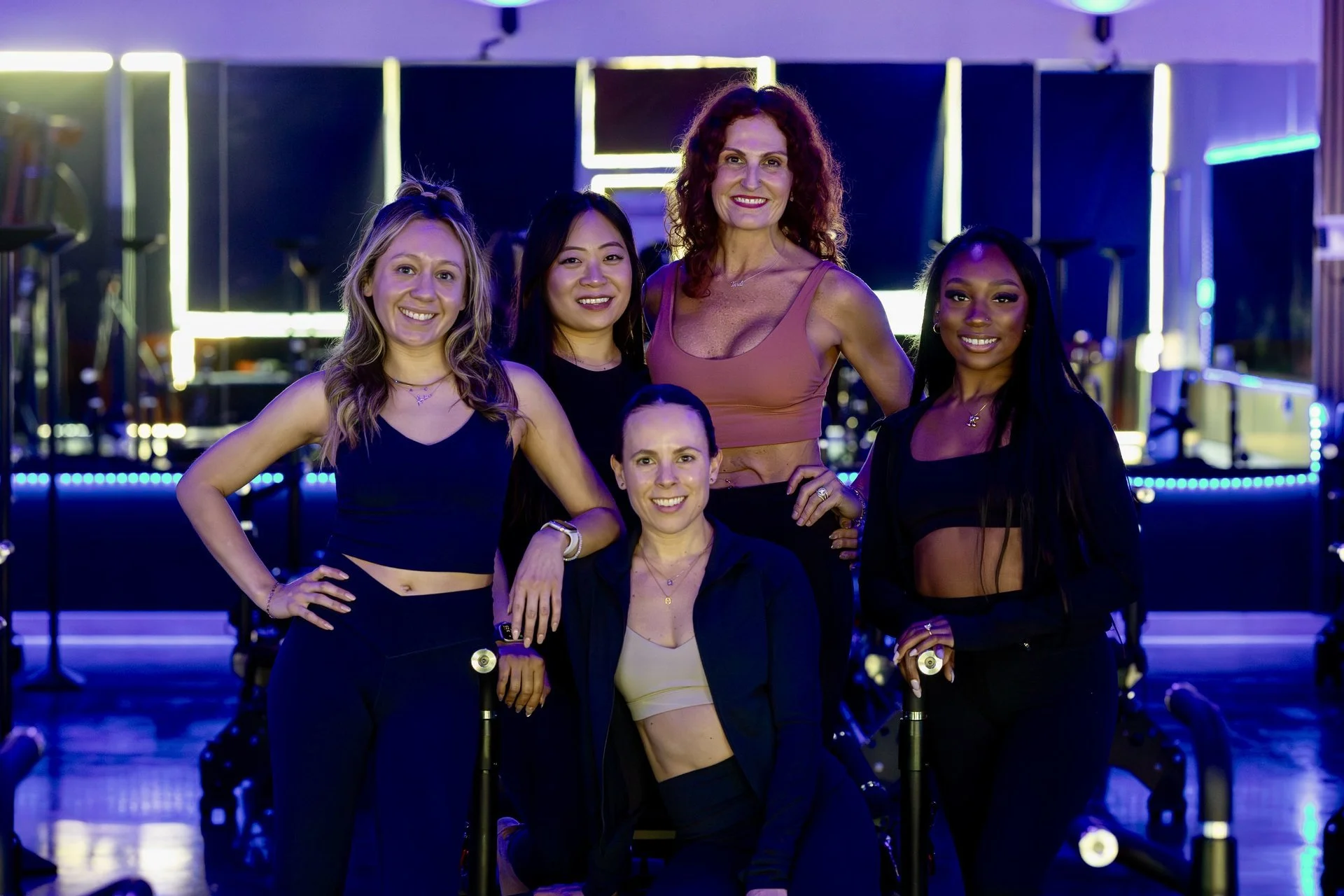
The reformer is the tool. These are the people who make it a workout.
The instructor matters more than the reformer: the machine supplies resistance, but it can’t see how you move. At Persona Pilates, instructors come up through in-house training, read your Persona profile before class, and use hands-on corrections throughout the 45 minutes. The Maven reformer is the tool, and the coach is the workout.
You can buy a reformer. You can’t buy the person who sees how you load a hip and then changes the next cue. Equipment is a tool. The workout at Persona Pilates is the coach using that tool on a body they already have a brief for.
That sounds obvious until you’ve spent months in rooms where the machine is the brand and the instructor is a soundtrack. No more generic classes where you get ignored. We rebuilt the job so the instructor is the method.
The Maven reformer still matters. It’s Persona Pilates’ custom reformer, from a partnership with Maven, and the 45-minute class lives on it. Springs, straps, and a moving carriage let you train full-body strength without jumping or landing. None of that places itself on your body. A person does.
What is in-house instructor training for?
Persona Pilates trains instructors in-house. That isn’t a franchise script handed to whoever is available that hour. The training exists so coaches can teach to your Persona profile, not to a laminated sequence that never changes.
They learn to read the software, and they learn to see movement patterns. They learn hands-on corrections that are actual coaching, not decorative tapping. The reformer is the environment. The instructor is the work inside it.
You’ll still get group cues, because a room needs a shared spine. The difference is what happens when the coach arrives at your carriage. They aren’t reciting. They’re applying a profile they already read, plus what they see in front of them.
Why do hands-on corrections matter so much?
A verbal cue can bounce off you. A physical cue shows your body the line. When an instructor places a hand and asks you to press into it, they’re teaching a pattern you can repeat. That’s strength work, and it’s also teaching.
Slow, controlled movement makes this possible. If you’re racing, there’s nothing to correct except chaos. Forty-five minutes of slower work gives the coach time to actually change how you move, so the work lands where it’s meant to instead of in your compensations.
Modifications follow the same philosophy. Your instructor can change springs or range without making you feel like a problem. Personalized to you means the session can stay full-body while the details shift.
How do instructors use your data and then watch you move?
The 3-minute Persona Survey sorts you into one of five Personas (Vitality Voyager, Balance Builder, Zen Starter, Power Pursuer, or Recovery Resilient) and generates 1 of 125 unique fitness profiles (your Persona combined with your own attributes). Proprietary software puts that profile in front of your instructor before class.
That’s the brief. Eyes and hands are the rest. Software without a trained coach is a PDF, and a coach without a brief is back to guessing in the hallway. Persona Pilates runs both.
You still speak up. If your shoulder is angry today, say so. The profile never outranks the person on the reformer, and your instructor’s job is to hold both at once.
Body Scanner tracks your progress over time, so your coach isn’t relying on memory alone. The journey can change as you do. Day one still starts with a human who already read the outline of your goals.
Why does leading with equipment leave you behind?
A beautiful machine with a generic script is still a generic class. You adapt to the choreography, and the choreography never adapts to you. That’s the pattern Persona Pilates was rebuilt to refuse.
Leading with the person flips the sequence: survey first, software second, and then the Maven reformer, used to load your body with control. The machine doesn’t get a personality. You do.
Grip socks are required so your feet stay honest on the carriage. No experience is needed because the instructor is there to teach the tool. Your first class is $10, which is enough of a door to find out whether this kind of coaching feels different.
What is the difference between a coached and an uncoached rep?
On an uncoached reformer, you can look busy and still miss the muscle you meant to train. You shove the carriage with the front of your hip instead of the back of your leg. You shrug a strap into your neck. You finish tired and no more organized than you started.
A coached rep interrupts that. Your instructor sees the dump, puts a hand where the work should live, and asks you to send the force there. The next rep is the workout, and the first rep was only information.
That’s the point of 45 slow minutes with a trained coach: someone is looking, and every rep gets a chance to improve. The reformer didn’t get smarter. The person coaching you on it did.
You won’t get a private session inside a group, but you will get enough attention that your movement patterns aren’t left to chance. That is the standard Persona Pilates trains to, class after class.
How do you book a coach, not a piece of furniture?
If you’ve been shopping studios by the look of the room, try shopping by whether anyone will have read your data before you arrive. That’s the test. The reformer will be there either way. The question is whether a trained instructor will use it on purpose.
Take the Persona Survey, then book a 45-minute class at Persona Pilates in Austin or Houston, from Downtown Austin to River Oaks. Let the person on the floor be the workout.
Book your $10 first class. Take the Persona Survey so your instructor can walk in already knowing how to coach you.