
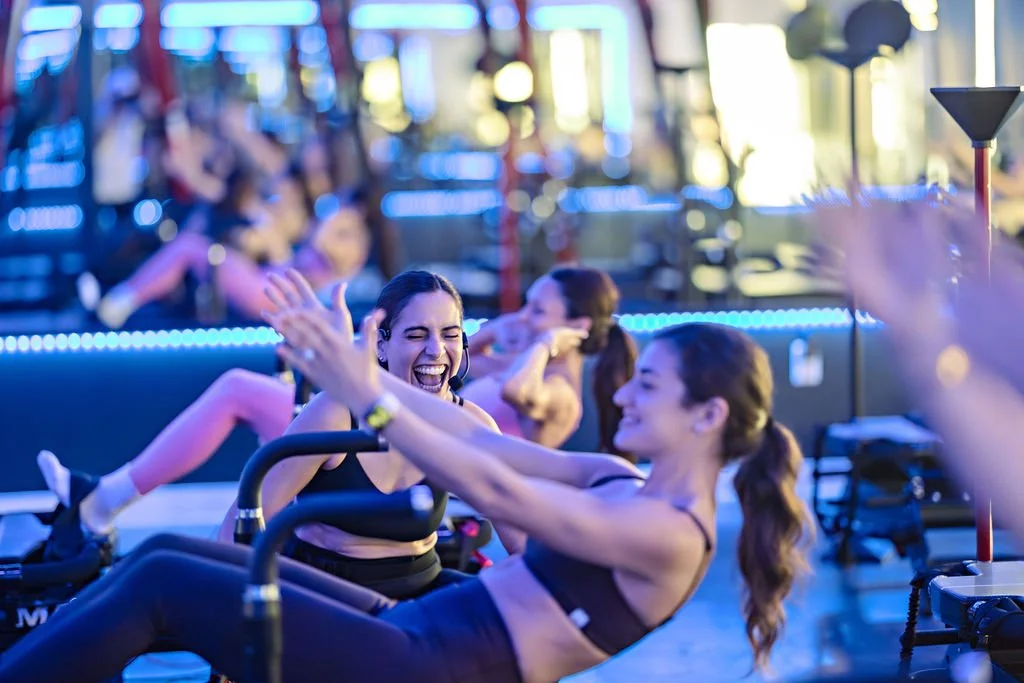
Hair up, off your face, out of the straps. Now you can focus on the rep.
The best hairstyle for reformer Pilates keeps hair off your face and off the machine. Try a crown top knot, a looped low ponytail for medium lengths, or flat French or Dutch braids for long or thick hair. Skip bulky low buns and claw clips, which can prop your head up when you lie back on the carriage.
You can nail your spring setup and still lose half of class to hair in your eyes. Or worse, to a bun that props your head up every time you lie back on the carriage.
ELLE’s “Best Hairstyles for Your Next Reformer Pilates Class” (Nykia Spradley, Sep 16, 2026) gets that practical problem right. Workout hair isn’t only about looking polished. On a reformer, the wrong style can get in the way of your form.
We’re not here to pick apart a beauty roundup. We’re here to back up the useful parts, add what we see on the studio floor in Austin and Houston, and connect your hair choices to how we coach personalized classes.
Why does your hairstyle matter on the reformer?
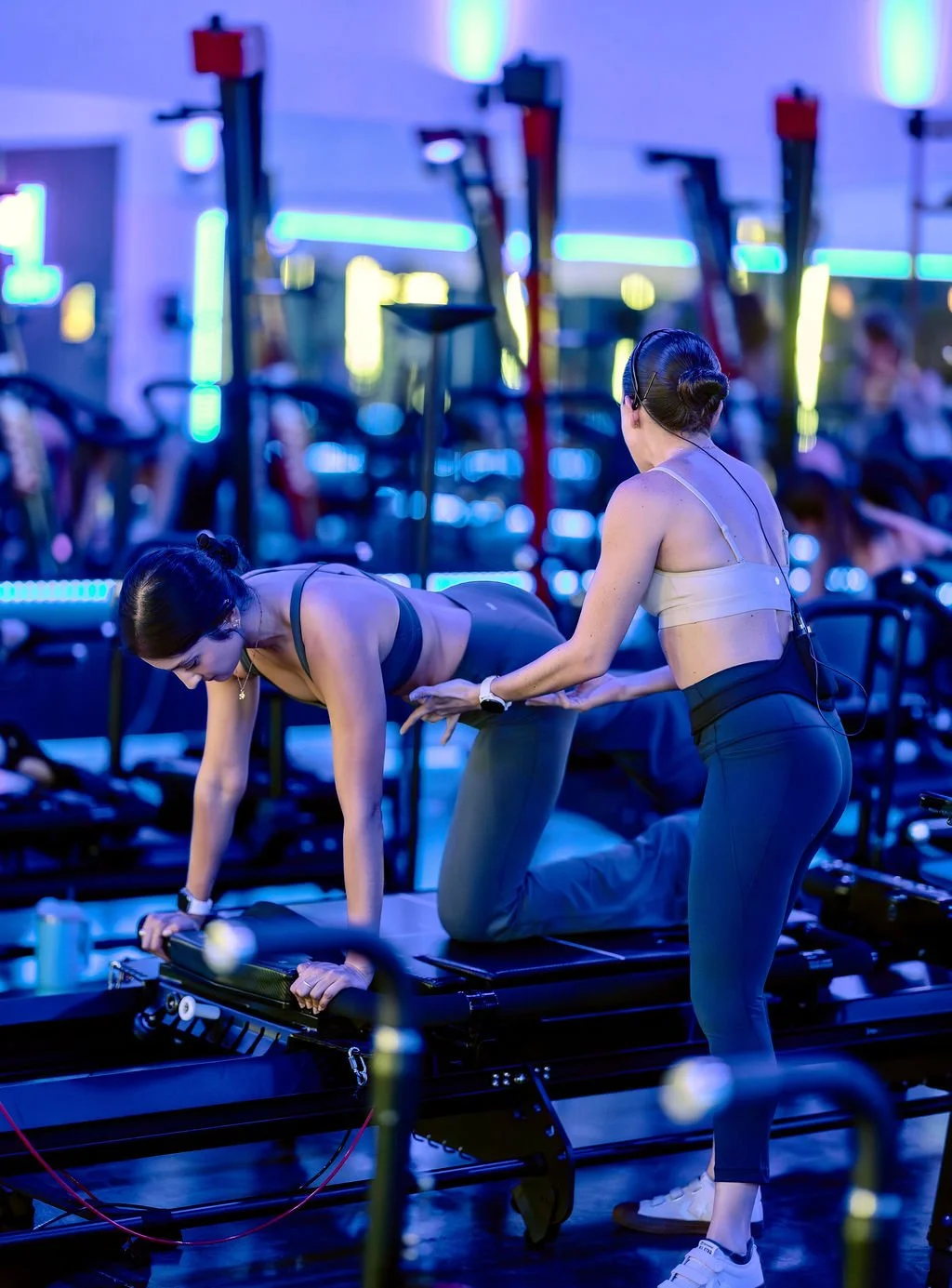
A secure bun stays put through every transition. Your instructor gets a clear view of your alignment.
The pros ELLE spoke with, including hairstylist Dimitris Giannetos and Drybar’s Margaux Mahoney, land on a simple rule. Keep hair secure, out of your face, and clear of the bands and straps. A clean bun, ponytail, or braid all work. Fewer distractions make for a better workout.
Here’s the reformer-specific advice we especially agree with:
Low, bulky buns and claw clips can create a hard pressure point when you’re on your back. That props your head up, throws off your neck alignment, and can add neck tension in a practice meant to ease it.
A classic top knot or crown bun keeps volume off the back of your skull, so you can lie flat on the carriage.
Looped or braided low ponytails keep medium-length ends from whipping around or catching under you during rolling and seated work.
Flat French or Dutch braids sit close to the scalp. They’re especially helpful for long, thick, or coily hair that fights a single elastic.
That’s not vanity advice. It’s equipment-aware coaching.
Which hairstyles work best on a Maven reformer?
Crown top knot (best default for lying-down heavy classes)
Secure your hair high at the crown. Aim for soft enough to be comfortable and tight enough to survive footwork, the Hundred, and strap work. If your bun digs in when you rest your head, it’s too low or too bulky. Rebuild it higher and flatter.
Looped low ponytail (medium lengths)
Make a ponytail, then loop the ends back through the elastic so the tail stays short and tucked. It’s a smart middle ground when your hair isn’t long enough for a secure braid but still swings in a standard pony.
Flat braids (long / thick / coily)
One or two braids that hug your head beat a loose braid that rolls under a shoulder strap. A sleek low bun also works, as long as it sits flat enough for the time you spend on your back.
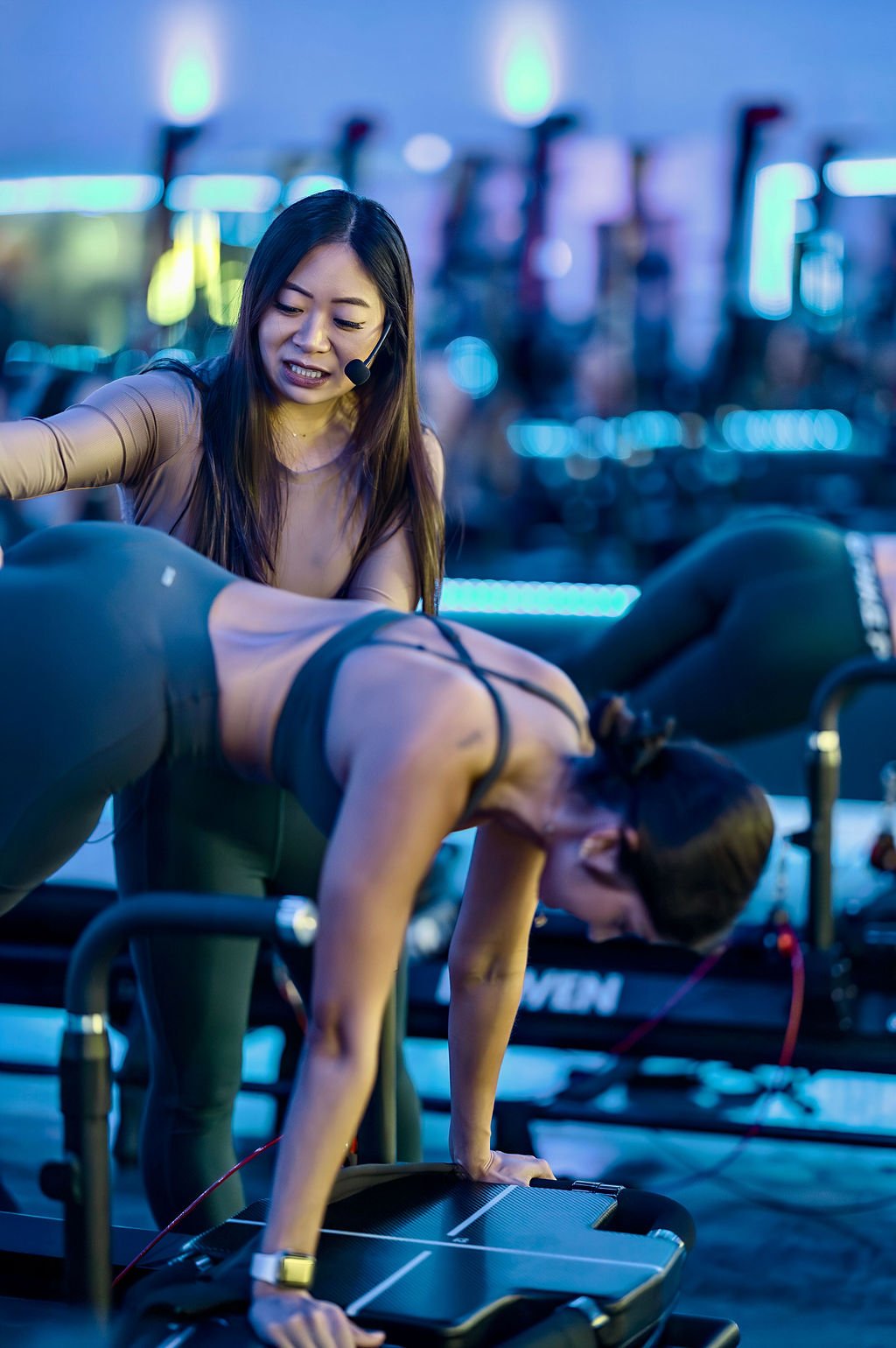
Sleek low buns work too. Keep yours flat so nothing digs in when you lie back on the carriage.
What to skip (or save for standing-heavy days)
Oversized claw clips at the back of your head
Half-up styles that drop hair into your face mid-plank
Heavy accessories that shift when you roll from your stomach onto your back
If a class leans more on standing and lower-body work, a mid-height pony or neat low bun can work. Just be ready to adjust if you end up on your back for long stretches.
What hair products hold up in Texas humidity?
ELLE’s product logic makes sense: smooth flyaways, hold the style, and skip anything that melts into your eyes when you sweat.
Here’s how that looks before a Persona Pilates class:
A light anti-frizz cream on dry or damp hair
Gel or mousse only where you need hold (don’t cake it on)
A wax stick or edge control for baby hairs
An optional thin headband or bandana if your edges poof, as long as it doesn’t change how your head rests on the carriage
Dry shampoo after class, so you don’t need a full wash every time
Austin and Houston humidity will test every slick-back. Tuck a spare elastic in your bag. You’ll thank yourself mid-class.
How does a personalized reformer studio help with hair, head position and form?
Hairstyles sound like a beauty sidebar. In a personalized studio, they belong in the same bucket as spring choice and injury notes. The goal is the same: remove friction so coaching can do its job.
Here’s how Persona Pilates differs from a generic group class:
3-minute Persona Survey before your first reformer class. It matches you with a Persona that shapes your class approach and coaching focus. Your instructor isn’t guessing whether you’re there for foundations, power, or recovery-minded work.
Your instructor sees your Persona profile before class. Your goals and injury history don’t reset every time you walk in. You shouldn’t have to re-explain your neck, your shoulders, or “please watch my form today” to a new coach.
Hands-on corrections from coaches trained the Persona Pilates way. If hair, head position, or tension shows up in your neck and shoulders, a coach who’s watching you can offer a modification. Nobody’s powering through the same choreography for the whole room.
Body Scanner for progress you can see. Looking put-together is nice. Measurable change over time is better, so you’re not judging class by sweat alone.
Getting your hair out of the way isn’t about looking good on Instagram. It’s so you can feel the carriage, hear the cue, and own every rep.
What else should you wear to reformer Pilates?
From our FAQ and first-timers guidance:
Grip socks are required at all studios for safety and hygiene. First visit? Ask the front desk. First-time clients receive a complimentary pair, and studios sell them if you need another.
Fitted activewear helps your instructor see your alignment and give hands-on corrections.
Water, plus a towel if you run warm.
Arrive early on your first visit so you can check in, meet your instructor, and get comfortable on the reformer.
Classes are 45 minutes. If you’re new, Foundations is a great place to start.
You don’t need to be flexible or “already in shape.” Every level is welcome here, and modifications are always available.
Book your $10 first class in Austin or Houston
Secure the bun. Pull on your grip socks. Leave the generic script behind.
Your first Persona Pilates class is $10 at any Austin or Houston location, from South Lamar to River Oaks. Take the short Persona Survey, walk in knowing your instructor already has your profile, and find out what personalized reformer actually feels like.
Start here: personapilates.com/first-timers
Attire & assessment FAQ: personapilates.com/faq
Find a studio: personapilates.com/locations
New to reformer? Reformer Pilates explained
Book your $10 first class in the Persona Pilates app or at personapilates.com.
Citation
ELLE, by Nykia Spradley: The Best Hairstyles for Your Next Reformer Pilates Class (published Sep 16, 2026).